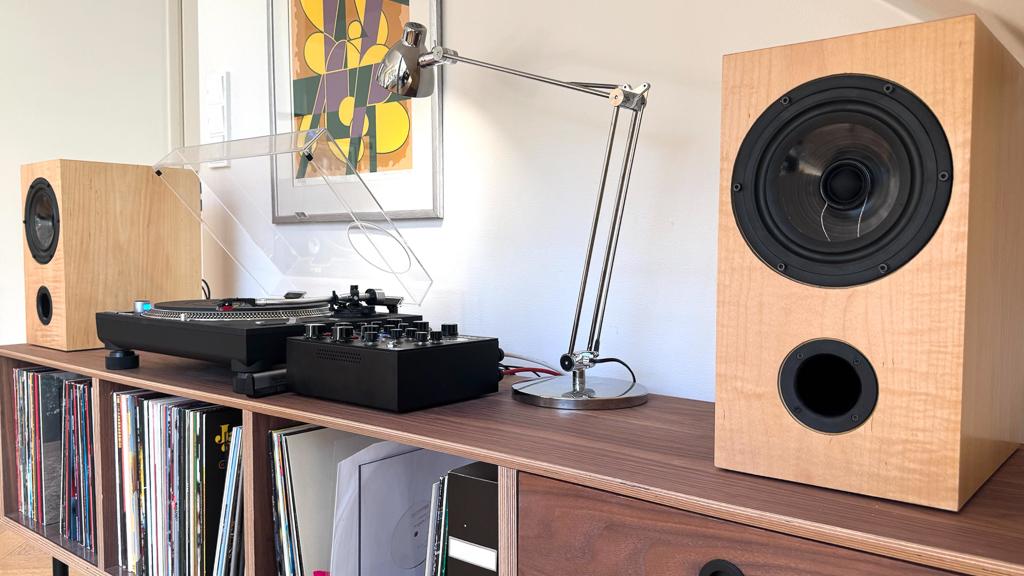
Designing and building a custom loudspeaker
Loudspeakers with the analogue signal chain in mind. A narrative of technical choices and listening experiences.
It so happened that a close friend drew me back into the hobby. At the same time, it sparked curiosity about questions I had never really had time to stop and explore. This non-commercial project was carried out independently and focuses solely on loudspeakers. It also serves as an example of a Labs-style way of working — applied problem-solving in practice.
I would not describe myself as an audiophile in the traditional sense. Differences in loudspeaker voicing have often been difficult for me to grasp. If one were approaching a purchase seriously, the sensible option would be to compare several alternatives side by side — ideally in the very space where they are intended to be used.
In practice, this has never felt particularly practical or proportionate to the effort involved. For a long time, I have therefore worked on the assumption that reputable brands are, through competition, technically close enough that a choice can reasonably be made with design as the primary criterion.
In this project, I am looking for a better way to make loudspeaker choices and to open up the craft of loudspeaker design through hands-on work.
Stereo or AV
The room already had a modern soundbar + subwoofer setup connected to the television. I did not feel inclined to mix a turntable into that system, as it represents a compromise when it comes to music playback:
- A soundbar is designed to create an enveloping sound field, which does not serve music reproduction particularly well.
- The distance between the left and right channels is too small to form a convincing stereo image.
- On its own, a soundbar does not extend to the lowest frequencies found in music (for example, bass guitar).
- A subwoofer reproduces low frequencies in mono and from the wrong direction, which reduces separation.
- As a whole, the system does not reflect how music is typically intended to be heard.
That said, the setup is not being replaced. In television and film use, the centre channel does most of the work, with the remaining channels largely dedicated to effects. Conversely, the weaknesses of stereo loudspeakers tend to stand out specifically in TV use:
- In spoken programmes, dialogue comes from the sides rather than from a natural direction. I have noticed that side-originating speech often needs to be compensated for by increasing the volume.
- Film soundtracks frequently use frequencies lower than those of traditional musical instruments, which stereo loudspeakers alone do not fully reproduce.
- Overall, the sense of space in films remains weaker.
For these reasons, the audio world has long been divided into AV and stereo camps. It is a purist choice to let different systems handle their own roles. In this project, the focus is exclusively on vinyl playback.
Technical requirements
The chosen placement for the loudspeakers was beneath a concrete staircase. Acoustically, the space is far from ideal, and it also required a compromise in terms of how widely the speakers could be positioned without the stairs limiting available height.
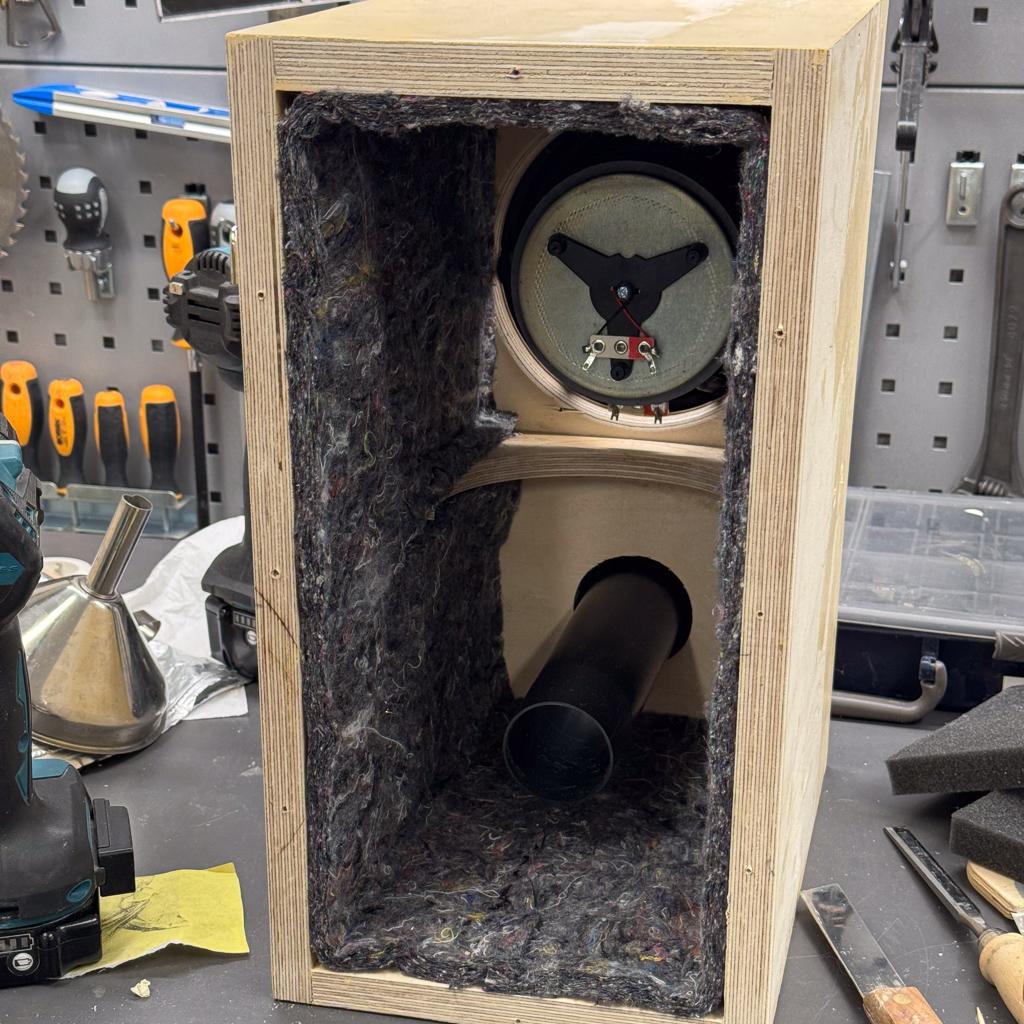
Due to these spatial constraints, floorstanding designs and three-way solutions were ruled out. However, both drivers — tweeter and woofer — could be positioned at ear height by using a coaxial driver. Reflections from three directions are minimised by a cabinet design with a front-firing bass reflex port. The coaxial layout also supports the practical requirement for forgiving speaker positioning.
The need to reproduce low-frequency instruments, combined with the openness of the space, placed further demands on cabinet volume. I estimated that a roughly 7-inch coaxial driver in a fairly large bookshelf-style enclosure would provide a suitable starting point.
Design requirements
In terms of style, the starting point was either a modern Scandinavian aesthetic or a classic UK hi-fi look. A light wood finish was preferred. With these constraints, off-the-shelf options were almost entirely ruled out.
I almost bought a finished product
I enquired about the availability of the Rubato loudspeakers from the British boutique manufacturer RFC (RFC Rubato). An oak-finished pair would have been available within a few months, with the total cost breaking down roughly as follows:
(£2,000 loudspeakers + £80 shipping) + VAT + customs ≈ €610
≈ €3,010
I believe the product would have been worth the money, but the additional charges ultimately tipped the balance the other way.
The economics of a commercially produced loudspeaker
Let's take a hypothetical example of a loudspeaker with a retail price of €1,000:
- The cost of the drivers might be in the region of €150–200.
- The cabinet could account for around €300, as it is built specifically for that product and often involves a degree of handwork.
- Ideally, the crossover should be of a similar value to the drivers, but this is rarely the case. This is often where the largest difference appears between small manufacturers, high-end and DIY solutions, and volume production. In mass-produced designs, the electronics frequently account for less than €100 — sometimes significantly less.
What about an experimental approach instead? At this point, the temptation to break the system down into parts and understand it through hands-on work becomes hard to ignore.
Manufacturing areas and key choices
Cabinet
Small manufacturers often use birch plywood as the cabinet's structural material, whereas MDF is more commonly favoured in mass production. As a material, plywood is stiffer, more resistant to moisture, and generally easier to work with. When the cabinet is built in-house, the price difference is not particularly significant.
Larger manufacturers frequently outsource cabinet production to subcontractors such as kitchen factories, for whom MDF is an optimised and cost-effective choice at scale. In vintage designs and lower-end mass production, particle board has also been commonly used; it is the lightest of these materials and also the least rigid.
Baltic birch often serves as a selling point for small manufacturers. In UK-made loudspeakers, however, the material can quickly accumulate cost when plywood travels from Finnish forests to a Latvian plywood mill, then by ship to the UK, and finally back to Finland (within the EU, with taxes applied).
For this project, the obvious choice was to source the best possible structural material from a local builder's merchant, both in technical terms and workability — in this case, 18 mm birch plywood.
Drivers
There are only a limited number of loudspeaker driver manufacturers worldwide. In practice, almost no loudspeaker brand manufactures its own components. Identical drivers are not always found in public catalogues, as brands often agree on minor customisations with manufacturers, such as cone colour.
Thanks to this concentration, driver manufacturing is nonetheless relatively cost-efficient. A builder aiming for quality can, with comparatively small price differences, source components that suit the project well. For example, in loudspeaker pairs retailing at €1,000 and €10,000 respectively, the cost of the drivers might be in the region of €200 and €800.
At the driver level, the upper end of the price range supports the aims of this project. In the case of coaxial drivers, there were ultimately not many options to choose from.
Electronics
There is hardly a loudspeaker brand that manufactures its own electronic components. Broadly speaking, the available options can be divided into two categories:
- Standard components, designed for general electrical equipment where power quality is not critical, or even directly relevant to operation.
- Specialised components, which use purer materials with higher efficiency. Tolerances are significantly tighter, performance remains more stable under load, and ageing has been slowed through the use of protective treatments.
In analogue audio, electricity functions both as the signal itself and as the force driving the loudspeakers. In this sense, it is unusually critical: everything passes through these components.
In finished loudspeakers around the €2,000 per pair price range, it is common to find generic components whose wholesale cost is measured in cents. More specialised components are usually present as well, but often only in the most critical parts of the circuit.
At around €15,000 per pair, component costs are typically already in the tens of euros per part.
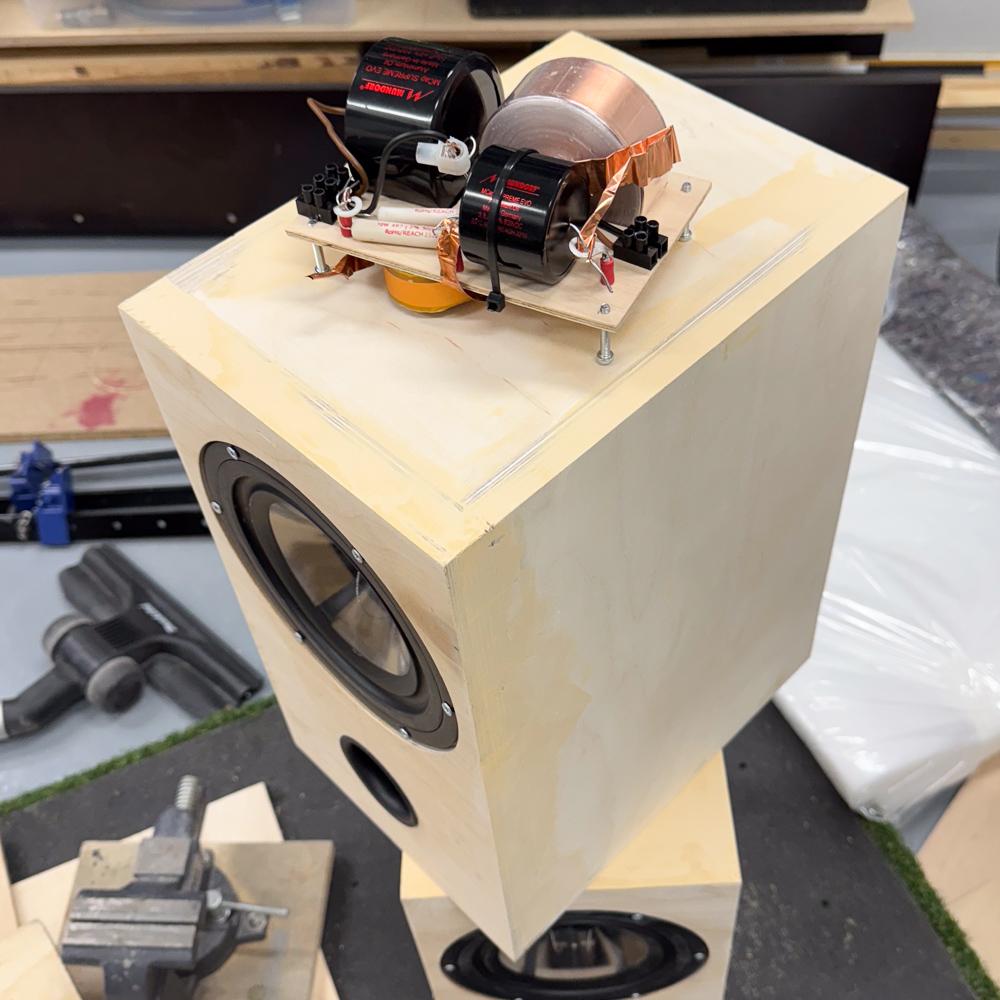
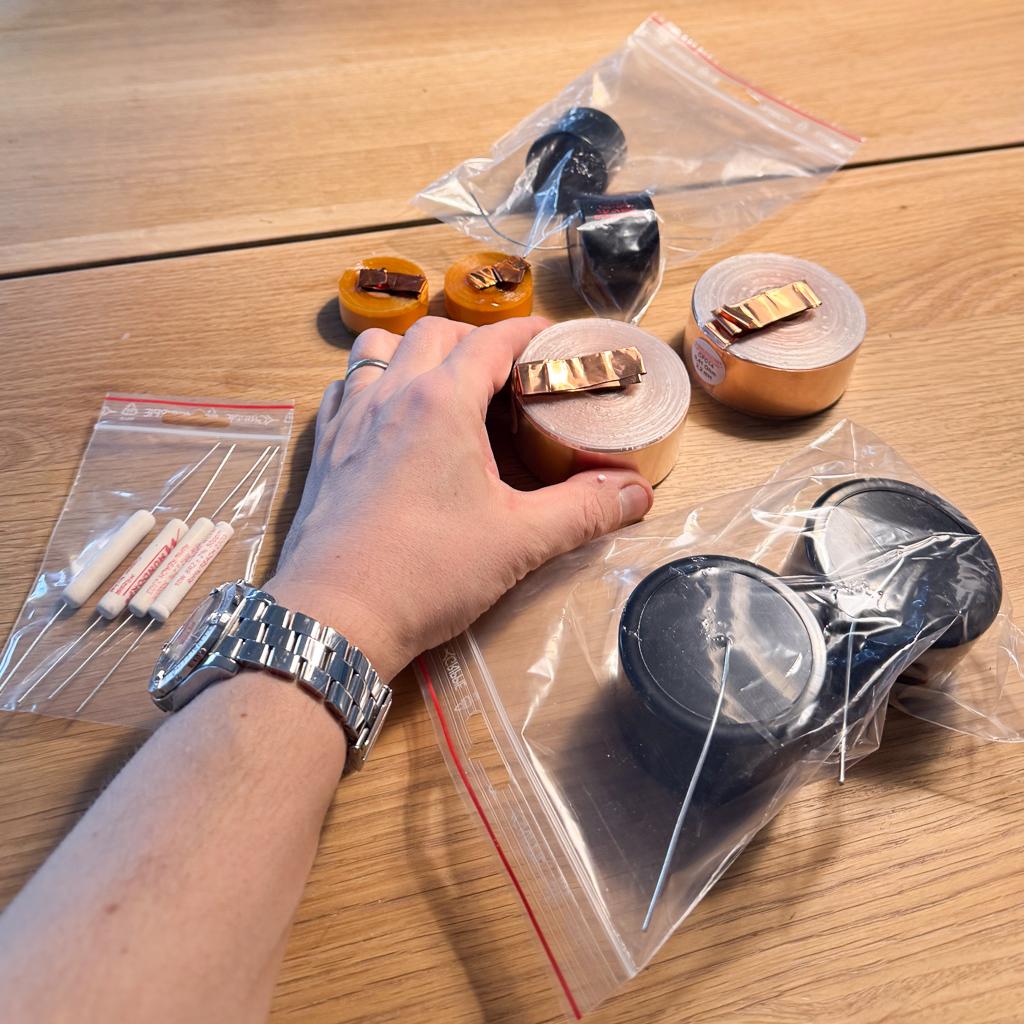
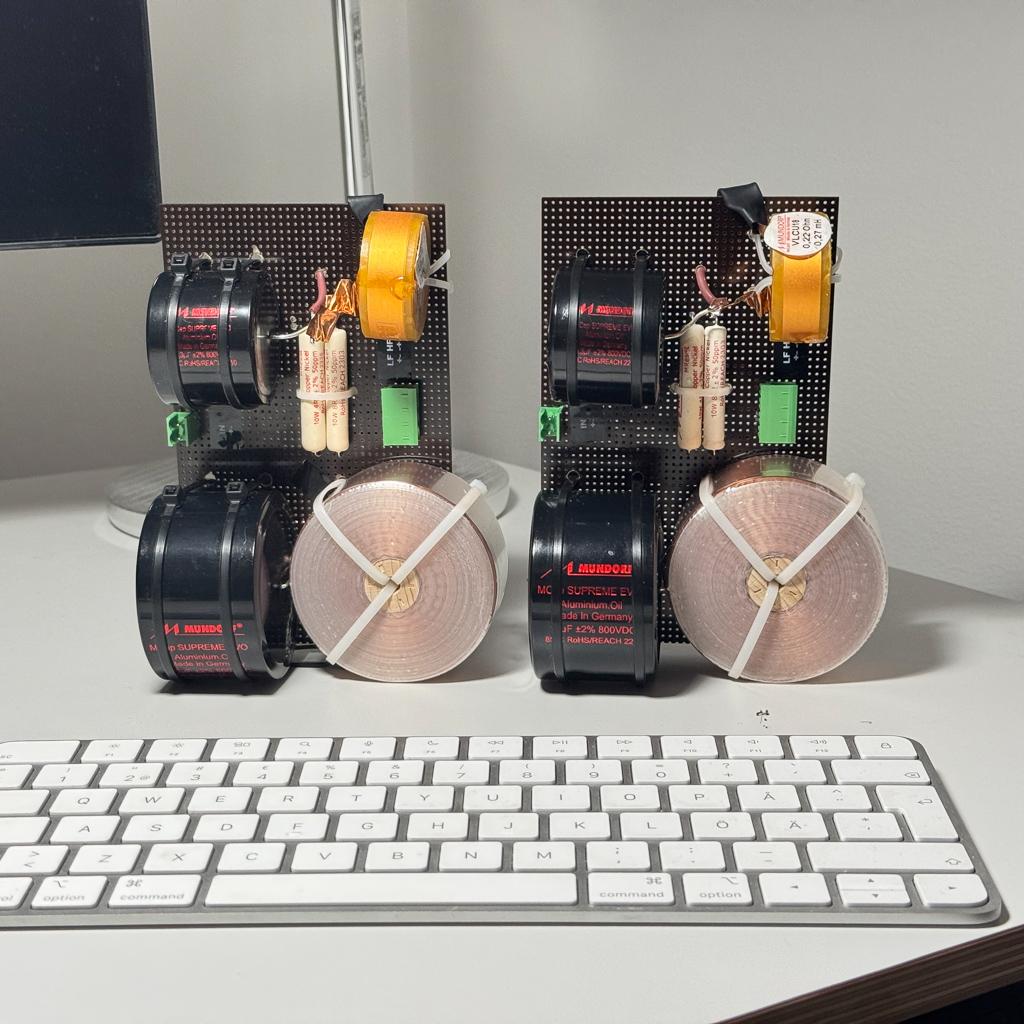
For this project, the sweet spot was found in crossover components priced at roughly €15–30 per capacitor. For experimentation, I also ordered options costing two to three times more — clearly into high-end territory.
Implementation details
The crossover was built on perfboard instead of a dedicated PCB, a common approach in small production runs. Signal paths were kept as short and well isolated, and the inductors were arranged to avoid mutual interference.
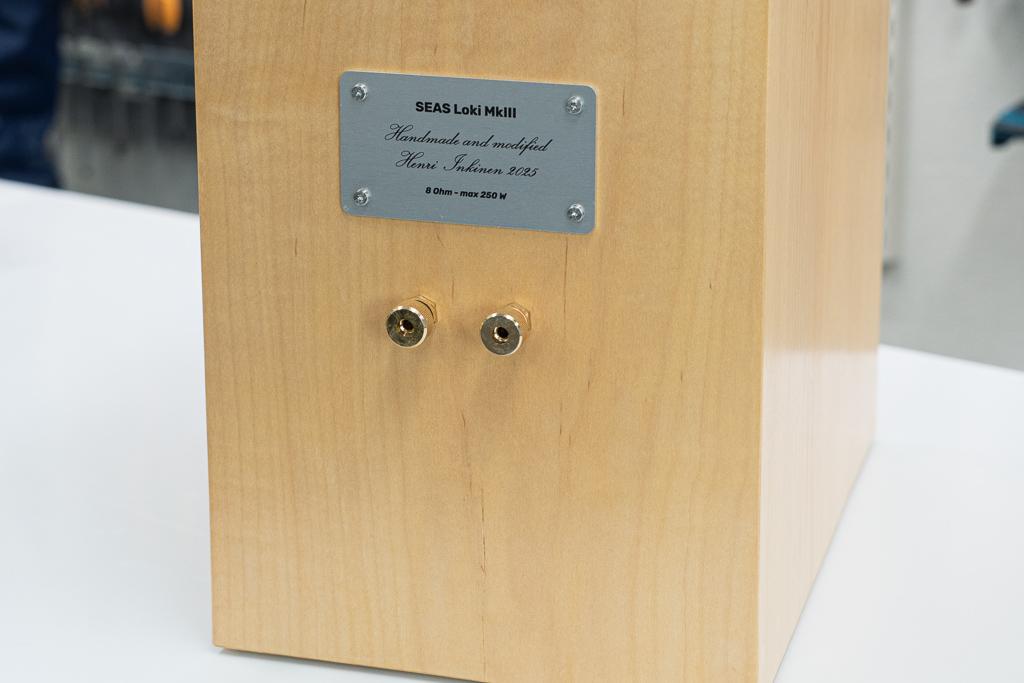
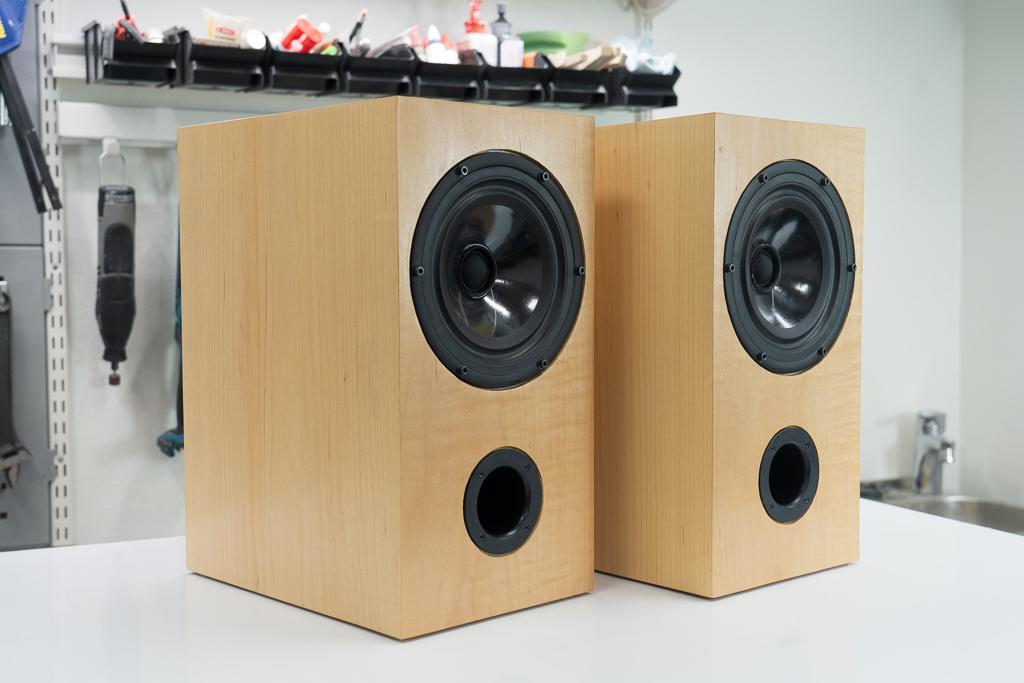
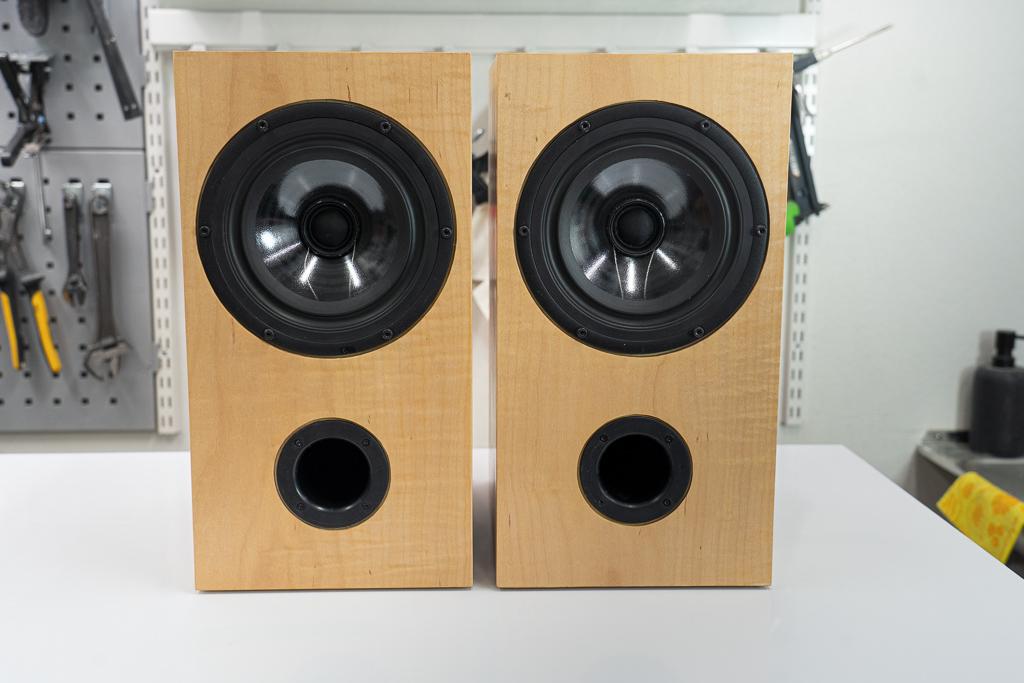
There was room to indulge in the finishing stage. Maple veneer sourced from Plektra Trading offers one of the most striking light wood finishes I am aware of. The figuring is familiar to many from high-end and custom shop guitars.
After veneering, the surface received six coats of furniture oil, with the first two tinted to fine-tune the final shade. The result is a light, honey-toned maple with a subtle figure — a natural-looking finish that already appears lightly patinated.
Measurements and subjective listening
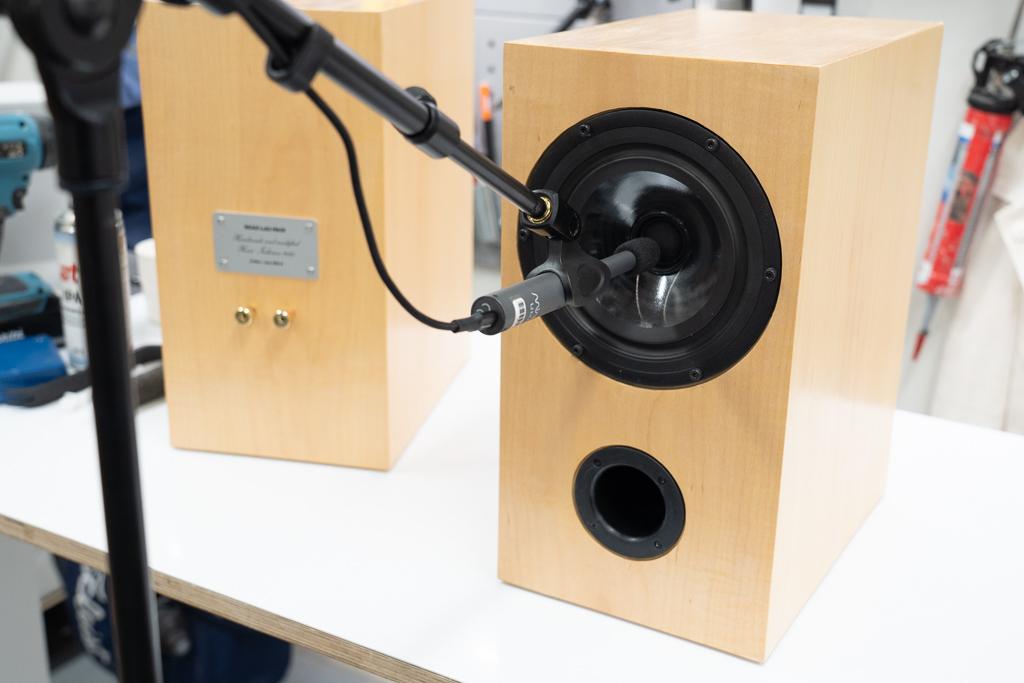
Measurements were carried out using a calibrated measurement microphone.
- The frequency response closely matches the data published by SEAS.
- Within a ±3 dB tolerance, the loudspeaker can be said to reproduce approximately 37 Hz to 20,000 Hz.
- By design, the loudspeaker is relatively insensitive at around 85 dB. It requires a capable amplifier, but handles power well.
In terms of sound quality, the result exceeded expectations. In A/B comparisons, the loudspeaker was clearly ahead across all areas when compared with a branded model retailing at roughly 50% more. The differences were particularly apparent in detail retrieval, clarity, and the handling of the stereo image. The comparison was carried out in the same room and with the same amplifier.
Bass performance was compared against a friend's older, made in USA-era JBL floorstanders. Those speakers have at least three times the cabinet volume and, to the best of my recollection, a 10-inch bass driver. Even so, in terms of low-frequency extension the speakers are easily in the same league — and clearly ahead in depth, control, and speed.
Amplifiers used
- Sonos Amp (2 × 125 W @ 8 Ω)
The amplifier lacked authority at both low and higher listening levels. At low volumes the sound felt underpowered and the bass seemed to disappear. In normal use, the volume control was already around the halfway point. Pushing it further would likely have led to distortion that was unfavourable for the loudspeakers. - Marantz 2235b (2 × 35 W @ 8 Ω)
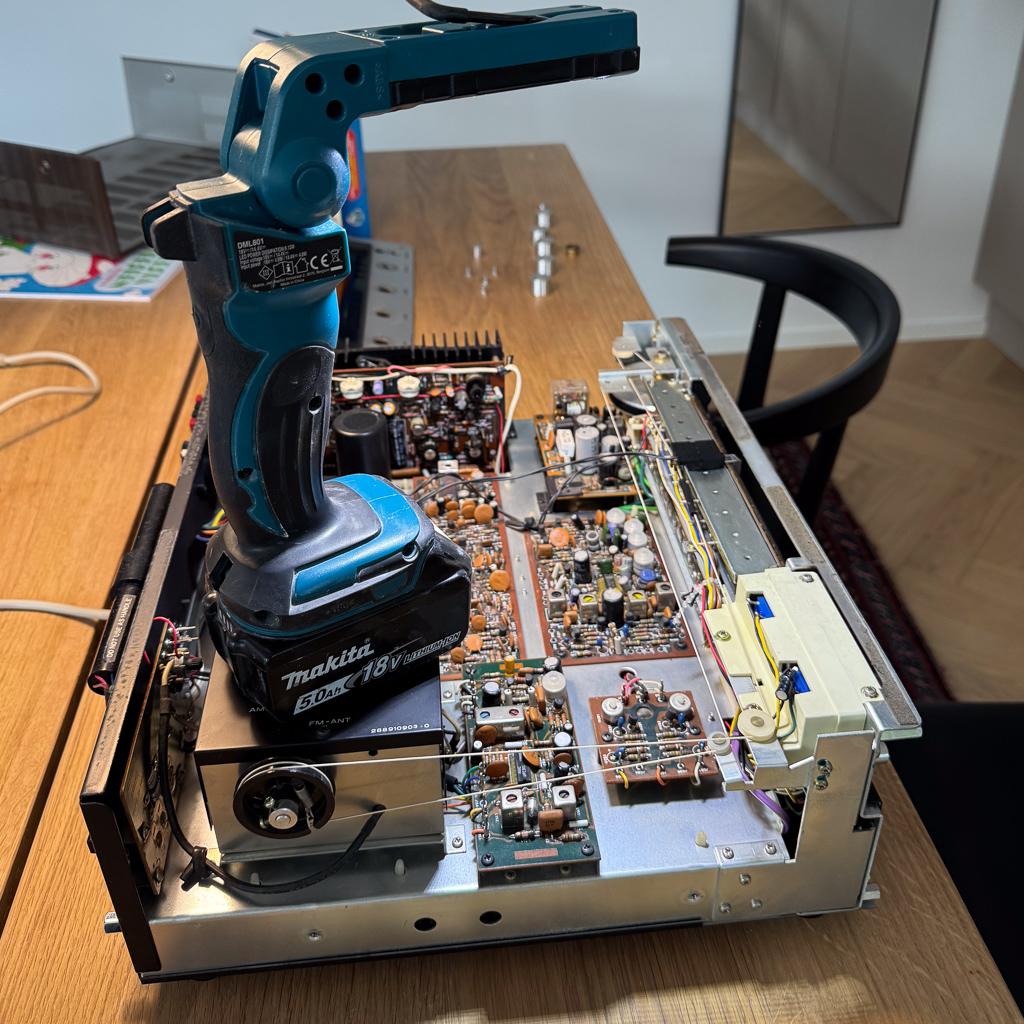
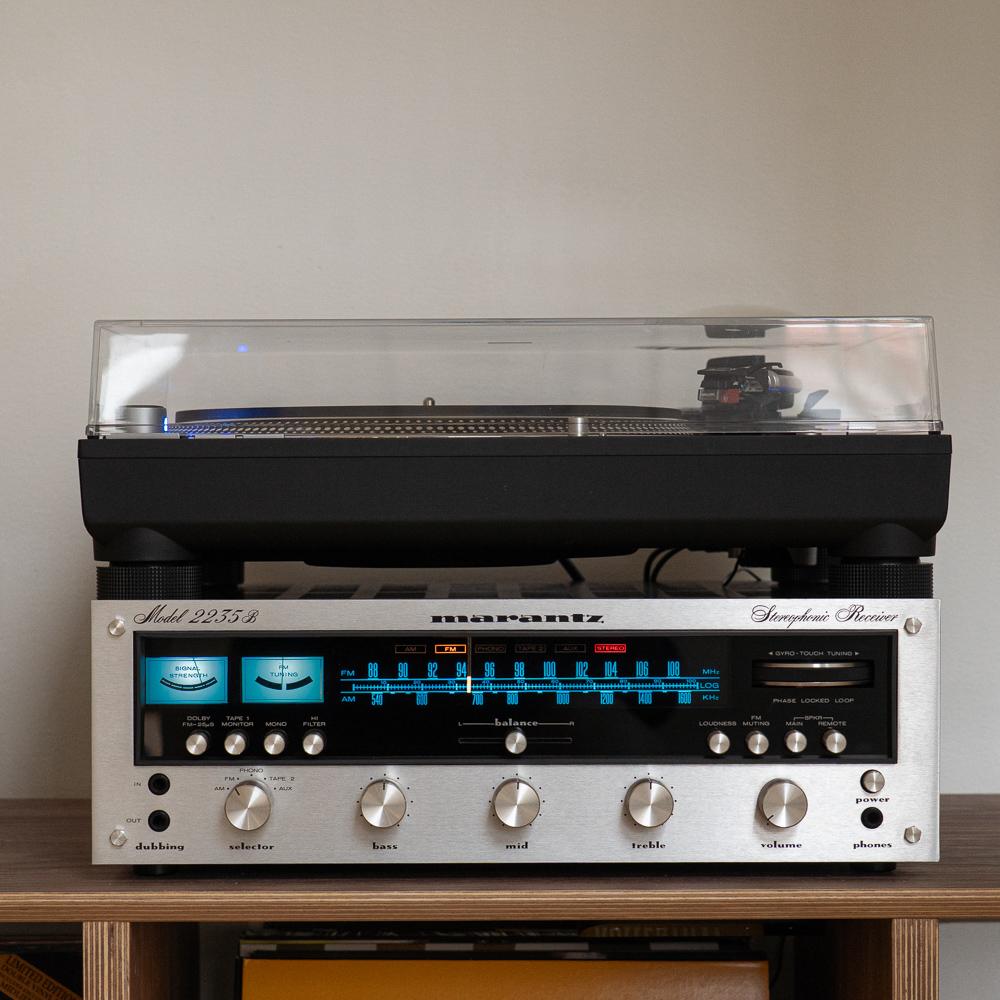
Despite its modest specifications, this older quality piece performed surprisingly well. Power was sufficient for normal listening, and the overall balance was clearly better than with the Sonos Amp. - NAD C298 (2 × 185 W @ 8 Ω)
This modern, dedicated power amplifier drove the loudspeakers effortlessly and, in my view, allowed them to approach their full potential. The combination is balanced and well controlled, and remains in permanent use.
Was the project worth it
The end result exceeded expectations, and the project was both educational and enjoyable. For those looking for finished loudspeakers of genuinely high quality, it is worth considering small, credible, and transparent manufacturers such as Buchardt Audio or the previously mentioned RFC.
Commissioning a pair of loudspeakers as a custom build can also be a sensible option if the right maker can be found. Resale value is, of course, more challenging than with established brands, but then again: why shouldn't a music enthusiast commission loudspeakers in the same way a tailored-suit customer commissions a suit?
I would not approach DIY primarily as a way to save money if the alternative is a loudspeaker pair priced below €3,000. When ambitions are high, however, such a project can be extremely rewarding compared with branded products offering similar performance. Beyond sound quality, the result can also be more individual, meaningful, and personal.
The total cost, excluding my own labour, came to approximately €1,250.
This figure also includes changes made along the way, such as veneering carried out twice. Some materials — particularly the generous offcuts of 18 mm birch plywood — were put to use in other projects. Costs could have been reduced, especially in the electronics, but the components were chosen close to the best available. At this level, there is some degree of paying for the last few percent, while the performance difference to the next tier down is already quite marginal.
Active monitors as an alternative?
A practically comparable option. Philosophically, not so.
Studio monitor design often starts from the goal of achieving the flattest possible frequency response, something that is rarely accomplished using passive components alone. In Genelec-style solutions, for example, the tweeter and woofer have their own power stages, and the signal is shaped using DSP.
When the aim is to transmit the motion of a turntable stylus to the loudspeaker diaphragm as unchanged as possible, the digital signal processing inherent in active designs breaks the continuity of the analogue signal chain. The signal is converted from analogue to digital and back to analogue along the way.
From a hobbyist's perspective, such a solution is also less engaging. Active monitors are, by nature, highly integrated systems, whereas the appeal of this project lay in building a chain from separate components and understanding it as a set of individual parts. Ultimately, this is largely a matter of taste — and best left open as such.